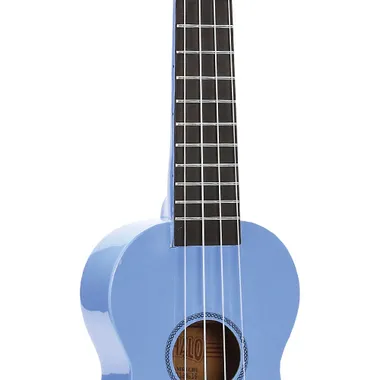
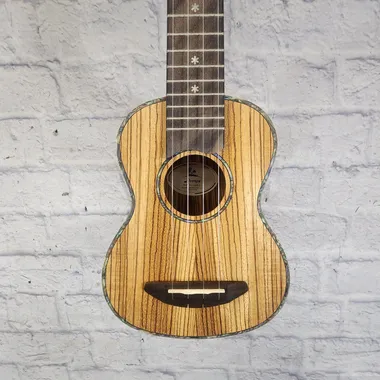
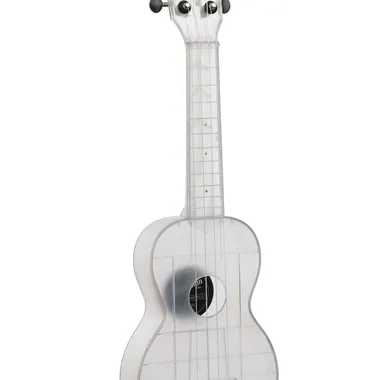
Most “best ukulele” pages are a ranked top ten with a star rating bolted onto each entry, which is a strange way to answer a question that isn’t really about ranking. A ukulele for a curious five-year-old and a ukulele for a determined eleven-year-old who already plays recorder are not competing for the same slot. So instead of ranking, this is four real ukuleles, each answering a different version of “which one do I actually buy.”
Get the size right before anything else
Ukuleles come in four sizes, but only two matter for a kid buying their first one. Soprano (21 inches) is the standard size and the right call for almost every kid from about age 5 through the early teens; it’s small enough for short arms and it’s what nearly every ukulele method book and school program is written for. Concert (23 inches) is worth considering for a bigger 10-to-13-year-old who finds the soprano cramped, but it’s a specialty pick, not a default.
Skip anything marketed as a “mini” or “1/4 size” novelty unless the player is under 4. It looks proportionate in photos and sounds thin in person, and most kids grow out of it within a year anyway.
The one spec that actually matters more than price
Every ukulele on this page uses nylon strings, and that’s not a coincidence: nylon is soft enough for a kid’s fingertips to press down without pain, where steel strings (built for a different instrument entirely, but sold on some novelty ukuleles) will make the first week miserable enough to end the hobby before it starts. If a listing doesn’t say the string material, that’s a reason to skip it, not a detail to assume.
Beyond strings, the two things worth paying for are geared tuners, which hold a tuning for days instead of hours, and a gig bag, which is the difference between an instrument that lives on a shelf getting bumped and one that survives being tossed in a car.
How these four compare
|
Kala KA-15S |
Mahalo MR1 |
Donner DUS-200 |
Kala Waterman |
| Price band |
$60–80 |
Under $40 |
$40–60 |
$50–70 |
| Body |
Mahogany |
Sengon wood |
Mahogany |
ABS plastic |
| Tuners |
Geared |
Friction |
Geared |
Geared |
| Comes with a bag |
No |
No |
Yes |
No |
| Survives being dropped |
Fair |
Fair |
Fair |
Best |
Frequently asked questions
What age should a kid start on ukulele?
Most method books and school programs start around age 5 or 6, mainly because that’s when hands are usually big enough to fret a chord without the strings buzzing. Younger than that, expect more banging on it like a drum than actual chords, which is a fine way to start too.
Do I need to tune it myself, or can a kid learn to do that?
A phone tuner app plus a few weeks of practice is usually enough for a kid around 8 or older to tune their own ukulele. Younger than that, plan on doing it for them, or on a geared tuner (see above) that drifts slowly enough that it barely needs doing.
Is a $30 ukulele actually worse, or just cheaper?
Both. The Mahalo pick on this page is the honest floor of “actually works,” but the friction tuners need a firmer hand and it won’t hold a tune quite as long as a geared-tuner ukulele. Below about $30, quality drops fast: bodies that warp, strings that won’t hold pitch at all, tuning pegs that strip.
Can this replace a real music lesson?
No, and nothing on this page claims otherwise. A ukulele that stays in tune and doesn’t hurt small fingers is the equipment half of the problem. The other half is still a teacher, a method book, or a patient parent with fifteen minutes a day.
If none of these four quite fit, the sizing and string-material rules above apply to any ukulele on the shelf, not just these ones. Get the size and the strings right and most of the rest is preference.

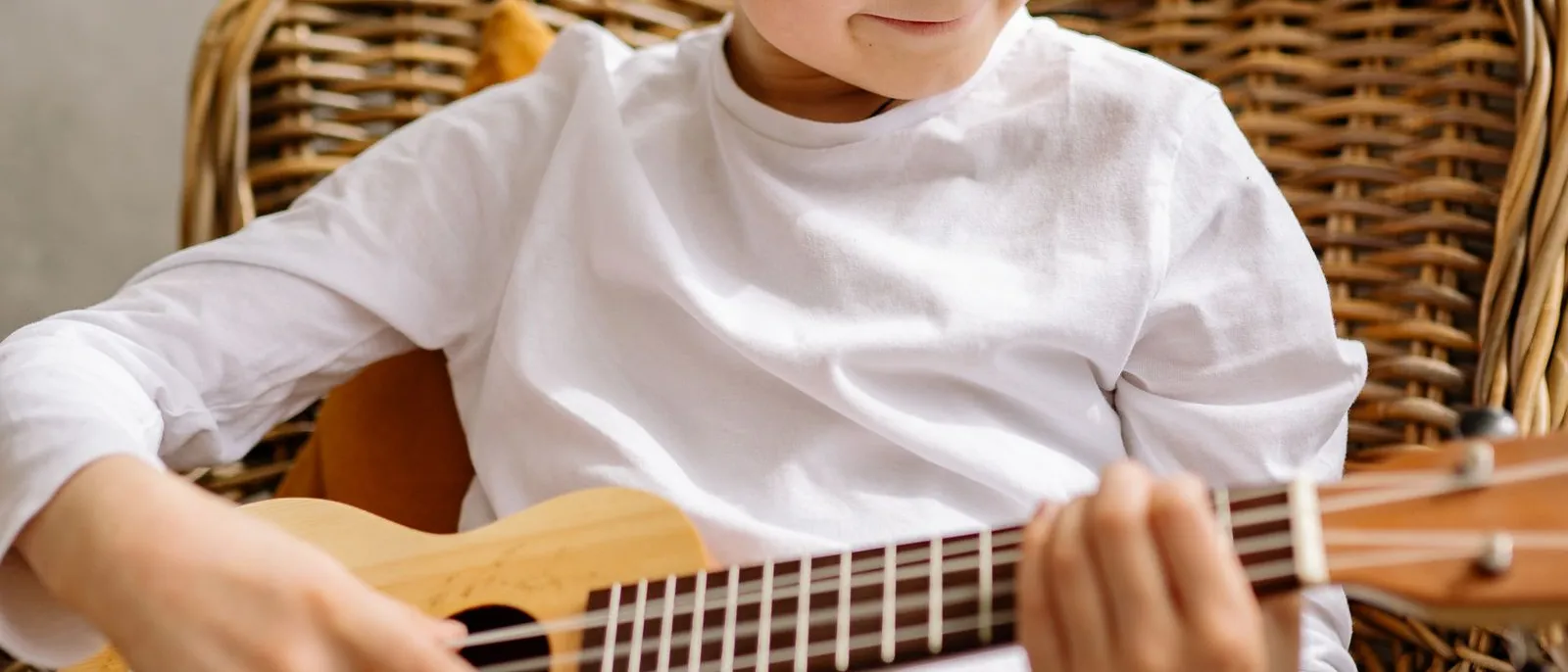
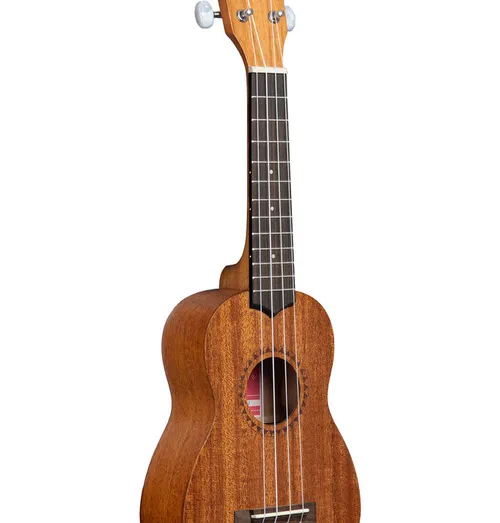 Best overall